


Massachusetts
State Facts
Deaths, or 82.7% of all overdose deaths in the year ending March 2025 involved opioids.¹
Claims, or 2.86% of all Medicare Part D claims were for opioids in 2023 – an average of 26 per prescriber.²
Opioid Prescriptions were written for every 100 persons in Massachusetts in 2023.³
the estimated total societal cost of opioid use disorder (OUD) in Massachusetts in 2024.⁴
Opioid Settlement Funds
The Massachusetts Opioid Recovery and Remediation Fund Advisory Council has identified four priority areas to address using funding from the Opioid Recovery and Remediation Fund. These categories, listed from highest to lowest priority, are equity, service expansion and enhancement, supporting families, and data collection and analysis.
Member & Endorser Footprint


















































Co-Sponsors (119th)
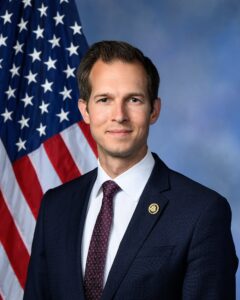
Rep. Jake Auchincloss (D-MA-4)

Rep. Seth Moulton (D-MA-6)

Rep. James McGovern (D-MA-2)
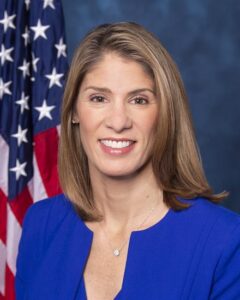
Rep. Lori Trahan (D-MA-03)

Rep. William Keating (D-MA-09)
2024 Passed Relevant Legislation
H.5143
This law mandates commercial insurers to cover non-opioid pain treatments without favoring opioids, limits utilization management for therapies like acupuncture, and requires insurer-submitted pain management plans, pharmacy education materials, and provider training on non-opioid alternatives.
Effective date
07/01/20252025 Introduced Relevant Legislation
HD 3239/SD 1822
Mandates that commercial health plans cover non-opioid medications without favoring opioids, applying to approximately 22% of the state’s population covered by regulated plans. The law also prohibits utilization management for certain non-opioid therapies, such as acupuncture, and requires the Department of Public Health to develop educational materials for pharmacies and implement provider training on non-opioid alternatives for pain treatment. Health plans must submit pain management strategies to the Division of Insurance by April 1, 2025, with coverage taking effect on July 1, 2025.
Introduced
01/17/2025Plan Impact
Medicaid1. Centers for Disease Control and Prevention (2025). Provisional Drug Overdose Death Counts. https://www.cdc.gov/nchs/nvss/vsrr/drug-overdose-data.htm
2. Centers for Disease Control and Prevention (2025). Medicare Part D Opioid Prescribing Mapping Tool. https://cms-oeda.maps.arcgis.com/apps/MapSeries/index.html?appid=5390718d875d4c049b1ac5976a9ff083
3. Centers for Disease Control and Prevention (2025). Opioid Dispensing Rate Maps. https://www.cdc.gov/overdose-prevention/data-research/facts-stats/opioid-dispensing-rate-maps.html
4. Avalere Health (2025). The cost of addiction: Opioid use disorder in the United States. https://advisory.avalerehealth.com/wp-content/uploads/2025/05/Avalere-Health-White-Paper_The-cost-of-opioid-addiction_OUD-in-the-United-States.pdf