


Oregon
State Facts
Deaths or 72% of all overdose deaths in the year ending April 2025 involved opioids.¹
Claims or 4.8% of all Medicare Part D claims were for opioids in 2023 – an average of 46 per prescriber.²
Opioid Prescriptions were written for every 100 persons in Oregon in 2023.³
the estimated total societal cost of opioid use disorder (OUD) to the state in 2024.⁴
Opioid Settlement Funds
Oregon’s Opioid Settlement Prevention, Treatment, and Recovery (OSPTR) Board will allocate 21-22% to harm reduction and overdose prevention, primary prevention, treatment, and recovery. The remaining 3-6% is directed towards research and evaluation; leadership, planning, and coordination; emerging issues; and administrative costs and expenses.
Member & Endorser Footprint










































Co-Sponsors (119th)
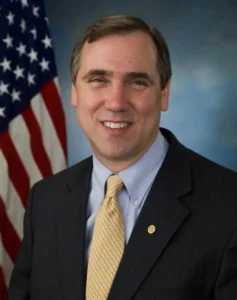
Sen. Jeff Merkley (D-OR)

Rep. Andrea Salinas (D-OR-6)

Rep. Cliff Bentz (R-OR-02)

Rep. Janelle Bynum (D-OR-05)
Passed Relevant Legislation
Senate Bill 598
Requires that state Medicaid and commercial insurance plans use the same utilization review and cost-sharing requirements for opioid and nonopioid drugs when they are prescribed for the same treatment.
Effective date
01/01/2026House Bill 3211
Requires the Oregon Health Authority to develop and make available a nonopioid directive form.
Effective date
01/01/2026Voices Letters
Senate Bill 598 Letter of Support
Compliance Letter to the Oregon Health Authority
Related to the draft pain management class update, expressing concerns that the submitted draft omits coverage of FDA-approved, non-opioid medications indicated for moderate to severe acute pain, undermining Oregon’s statutory framework under SB 598. Specifically, Voices urges the Oregon Health Authority to revise the draft pain management class update to:
- Explicitly acknowledge and evaluate all FDA-approved non-opioid medications indicated
for moderate to severe acute pain; - Ensure that clinical guidance reflects the full range of available non-opioid treatment
options; and - Align recommendations with the intent and requirements of SB 598 to prevent insurance-driven preference for opioid therapy.
1. Centers for Disease Control and Prevention (2025). Provisional Drug Overdose Death Counts. https://www.cdc.gov/nchs/nvss/vsrr/drug-overdose-data.htm
2. Centers for Disease Control and Prevention (2025). Medicare Part D Opioid Prescribing Mapping Tool. https://storymaps.arcgis.com/stories/f1051d23738c4980a08002bf301f7d8a
3. Centers for Disease Control and Prevention (2025). Opioid Dispensing Rate Maps. https://www.cdc.gov/overdose-prevention/data-research/facts-stats/opioid-dispensing-rate-maps.html
4. Avalere Health (2025). The cost of addiction: Opioid use disorder in the United States. https://advisory.avalerehealth.com/wp-content/uploads/2025/05/Avalere-Health-White-Paper_The-cost-of-opioid-addiction_OUD-in-the-United-States.pdf